
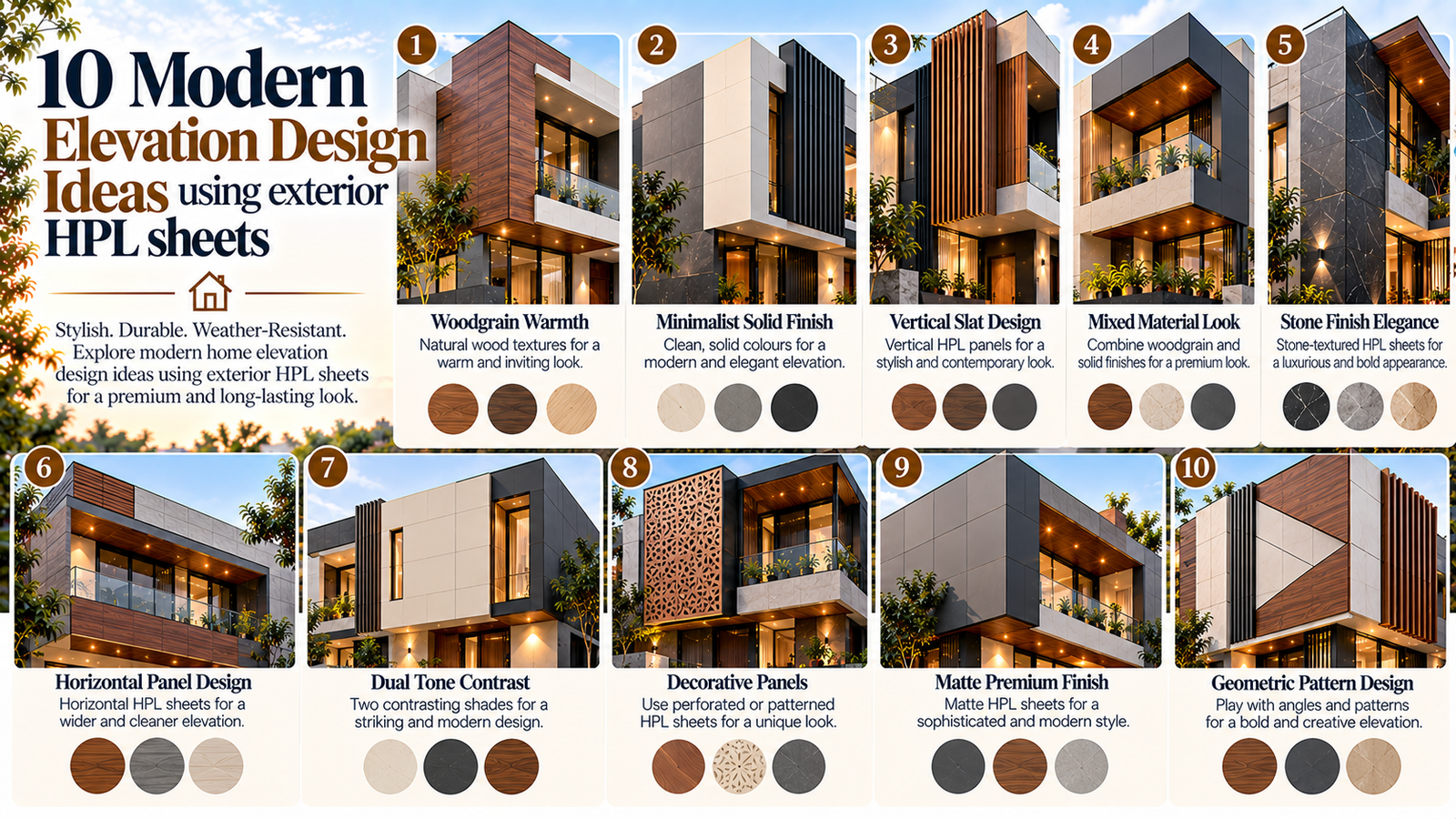
Twenty years ago, “renovating the exterior” of an Indian home meant one thing: repainting. That’s no longer the only serious option on the table, and it’s worth understanding how that shift actually happened.
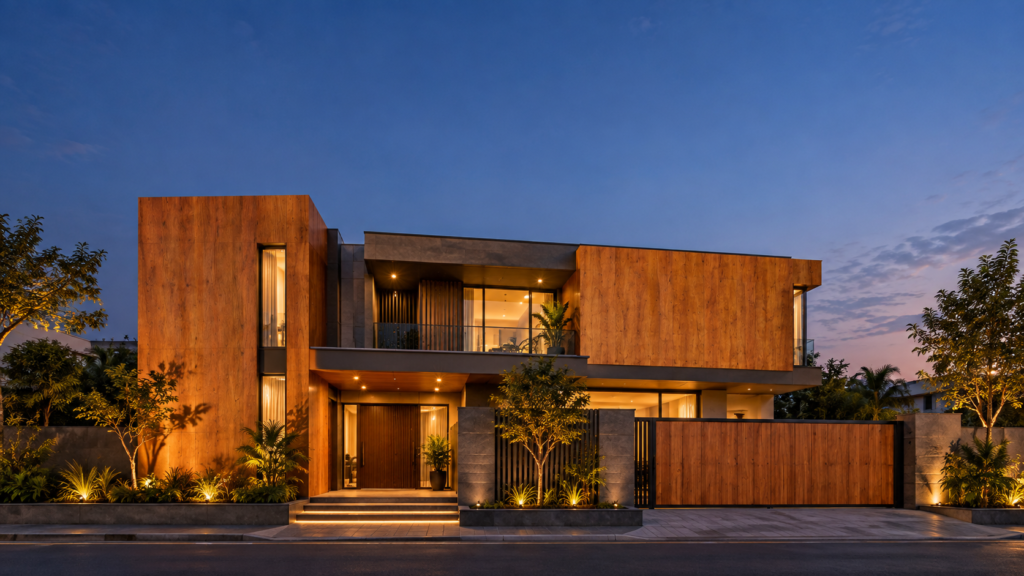
From commercial-only to residential-accessible
Cladding materials like HPL were, for a long time, mostly seen on commercial and institutional buildings — the kind of project with a facade budget and a specifying architect involved from the start. As manufacturing scaled and D2C retail models (like UVCLAD, sourcing from HPLMaker) made the category accessible to individual homeowners with a simpler buying process, cladding moved from a specialist commercial material into an ordinary home renovation option.
Architecture magazines and social media accelerating awareness
Elevation design content — before-and-after transformations, finish comparisons, design inspiration — has become genuinely popular content, which has done a lot to familiarise ordinary homeowners with cladding as a category they can actually consider, not just admire in a magazine about someone else’s house.
Festive-season renovation culture playing a role
India’s strong tradition of festive-season home renovation, particularly around Diwali, has become a real driver of adoption — homeowners who’d otherwise repaint on the usual cycle are increasingly considering a cladding upgrade instead when that renovation moment comes around, treating it as a chance to make a more permanent change rather than repeat the same cycle again.
What “design category” actually means here
It means cladding is no longer just a material decision — it’s become a genuine design language, with its own vocabulary (wood-finish, stone-texture, solid-tone, mixed-material facades) that homeowners actively discuss and compare, the way they’d discuss kitchen design or flooring choices. That’s a meaningfully different position than being a niche technical material only architects think about.
Where this is heading
As more homes in a given area get clad and visibly hold up well over several years, expect the category to keep normalising further — proof-by-neighbourhood tends to move faster than any marketing effort on its own, and cladding’s ten-plus year track record in Indian conditions is now genuinely establishing.

FAQ
Is exterior cladding still considered a premium-only choice in India?
Less so than it used to be — pricing and accessibility have both broadened considerably, though it remains a bigger single decision than a repaint, given the upfront cost difference covered elsewhere on this site.
What’s driving the wood-finish and stone-texture trend specifically?
Largely a preference for a warmer, more natural-feeling exterior compared to flat paint, combined with the practical durability advantages of a manufactured panel over trying to achieve that look with real timber or stone outdoors.
Is this trend specific to India, or part of a broader global shift?
Cladding has been an established category internationally for longer; India’s residential adoption specifically has accelerated more recently as the category has become more accessible to individual homeowners.